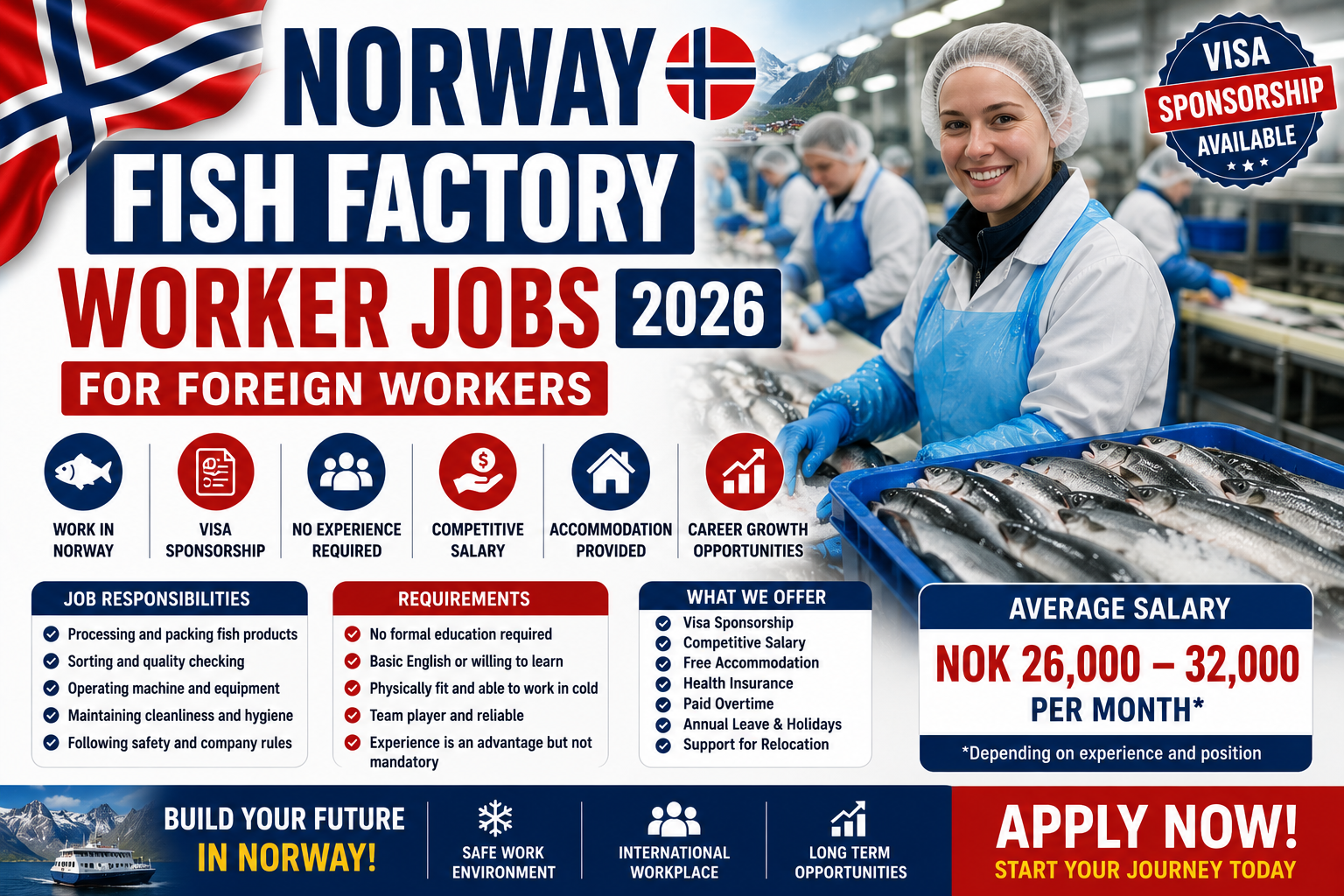
Norway is one of the world’s leading seafood exporters, and its fish processing industry continues to create strong job opportunities for foreign workers in 2026. Due to increasing seafood demand, labor shortages, and seasonal production peaks, many Norwegian seafood factories hire international workers for fish processing, packing, and production roles.
These jobs are especially popular among foreigners because they often require:
- Basic qualifications
- Physical work ability
- Basic English communication
- Willingness to work in cold environments
Some seafood companies and recruitment agencies also help workers with accommodation and work permit guidance.
This complete guide explains:
Types of fish factory jobs in Norway
- Salary expectations in 2026
- Work visa information
- Requirements for foreign workers
- Working conditions
- Best regions for jobs
- How to apply successfully
Why Norway Needs Fish Factory Workers
Norway’s seafood industry is one of the largest in Europe.
The country exports:
- Salmon
- Cod
- Crab
- Mackerel
- Seafood products worldwide
As seafood production continues growing, factories need workers for:
- Fish cutting
- Processing
- Packing
- Quality control
- Cleaning operations
Several employers actively recruit foreign labor because local workforce shortages remain a challenge.
Types of Fish Factory Jobs Available
There are many roles available inside Norwegian seafood factories.
1. Fish Processing Worker
Responsibilities include:
- Cleaning fish
- Cutting and filleting
- Removing bones
- Sorting seafood products
- Many factories provide on-the-job training.
2. Seafood Packing Worker
Packing workers:
- Label products
- Vacuum-pack seafood
- Prepare export shipments
- Check packaging quality
- Seafood packing jobs remain one of the most common positions for foreign workers.
3. Production Line Worker
Production workers assist with:
- Conveyor belt operations
- Machine handling
- Product sorting
- Factory cleaning
4. Quality Control Assistant
These workers inspect:
- Product freshness
- Packaging quality
- Hygiene standards
- Attention to detail is important.
5. Crab Factory Worker
Some factories specialize in crab processing and seasonal seafood production.
For example, Hitramat AS recently advertised seasonal production worker jobs for 2026.
Salary for Fish Factory Worker Jobs in Norway 2026
Norwegian seafood factory jobs generally offer competitive salaries compared to many countries.
Estimated Salary Range
Position
Estimated Salary
Entry-Level Worker
NOK 23,000 – 28,000 monthly
Experienced Fish Processor
NOK 30,000 – 38,000 monthly
Specialized Seafood Worker
NOK 40,000+ monthly
Some job listings in 2026 mention salaries around NOK 23,000–28,000 monthly for seafood packing positions.
Overtime and night shifts can increase total earnings significantly.
Benefits Offered by Employers
Many seafood employers provide additional benefits.
Common Benefits
Overtime pay
Paid holidays
Safe work environment
Training programs
Work clothing
Shift allowances
Some employers may also offer:
Accommodation support
Transportation assistance
Visa sponsorship guidance
Several recruitment listings mention housing support or subsidized accommodation.
Work Visa for Foreign Workers
Foreign workers outside the EU generally need a Norwegian work permit to work legally.
Common Work Visa Pathways
Skilled Worker Residence Permit
Some seafood processing roles may qualify depending on:
Experience
Employer sponsorship
Contract conditions
Seasonal Worker Permit
Seasonal seafood factory jobs are common in Norway.
This permit is often used for:
Fish processing
Crab factory work
Seafood packing
especially during busy production seasons.
Requirements for Fish Factory Jobs
Most factory jobs do not require advanced education.
Common Requirements
Basic English communication
Physical fitness
Ability to work in cold environments
Teamwork ability
Flexible shift availability
Some employers prefer previous factory or food industry experience.
Physical Requirements
Fish factory work can be physically demanding.
Workers may need to:
Stand for long hours
Lift boxes
Work in chilled rooms
Perform repetitive tasks
Several job listings mention cold storage and fast-paced work environments.
Language Requirements
Basic English is usually required.
Many factories use English as the workplace language for international teams.
Learning basic Norwegian can still improve:
Daily communication
Long-term opportunities
Workplace integration
Best Regions for Fish Factory Jobs in Norway
Most seafood factories are located in coastal regions.
1. Tromsø
Tromsø is known for seafood and fishing industries.
2. Bergen
Bergen is one of Norway’s major seafood hubs.
3. Ålesund
Ålesund has strong fish processing and export industries.
4. Trondheim
Trondheim offers opportunities in seafood production and logistics.
Working Hours in Fish Factories
Most workers operate on shift systems.
Typical schedules include:
Day shifts
Evening shifts
Weekend work
Overtime hours
Some factories operate rotating shifts depending on production demand.
Accommodation and Living Costs
Some employers assist with:
Shared housing
Staff accommodation
Housing allowances
Estimated Monthly Rent
Area
Estimated Rent
Shared Accommodation
NOK 4,000 – 7,000
Small Apartment
NOK 8,000 – 14,000
Coastal factory towns are usually cheaper than Oslo.
Challenges Foreign Workers May Face
Cold Climate
Norwegian winters can be extremely cold.
Physically Demanding Work
Fish factory work often involves:
Long standing hours
Repetitive movement
Heavy lifting
Fast-Paced Production
Factories operate under strict hygiene and production targets.
Shift Work
Night shifts and overtime are common during peak seasons.
How To Apply for Norway Fish Factory Jobs
1. Official Job Portals
Useful platforms include:
NAV Norway Jobs Portal
Jobzone Norway
Indeed Norway
2. Seafood Company Career Pages
Large seafood companies regularly hire workers directly.
Example:
SalMar Careers
3. Recruitment Agencies
Several staffing agencies recruit seafood workers internationally.
Always verify agency legitimacy before paying fees.
Tips To Increase Your Hiring Chances
Gain Factory Experience
Experience in:
Food processing
Packing
Warehousing
Manufacturing
can improve selection chances.
Improve English Skills
Basic workplace communication is important for safety and teamwork.
Prepare a European-Style CV
Employers often prefer simple, professional resumes.
Apply Early for Seasonal Jobs
Many seafood factories recruit months before peak production seasons.
Can Fish Factory Jobs Lead to Long-Term Opportunities?
In some cases, yes.
Long-term employment may help workers qualify for:
Extended work permits
Residence pathways
Skilled worker opportunities
Eligibility depends on immigration rules and employer sponsorship.
Safety Tips for Foreign Applicants
Unfortunately, fake recruitment scams are common online.
Important Safety Advice
Never pay huge visa fees upfront
Verify employers carefully
Use official websites
Read contracts properly
Avoid fake social media recruiters
Future of Fish Factory Jobs in Norway
Norway’s seafood industry is expected to remain strong because:
Global seafood demand continues increasing
Salmon exports remain highly profitable
Seafood processing facilities are expanding
Seasonal labor shortages continue
This means foreign worker demand is likely to stay strong throughout 2026 and beyond.
Final Thoughts
Norway Fish Factory Worker Jobs 2026 for Foreign Workers offer excellent opportunities for individuals seeking:
Stable industrial employment
European work experience
Competitive salaries
Seasonal or long-term work opportunities
For physically active workers willing to adapt to cold environments and factory schedules, Norway’s seafood industry can provide a strong pathway toward international work experience and financial stability.